


3 Reasons your business needs a company blog
Most world-famous brands have a blog. Read this article to find out why.

According to Google, 63% of shopping occasions begin online. The B2B audience is even more digitally-savvy with 89% of B2B customers using the internet during the research process.
No wonder digital plays a huge part in the buyer’s journey. With so much information available online and so many products and service providers on the market, people want to make sure that they get the best deal for their money. A company blog is one of the most effective ways to present your business to potential customers and to convert them into clients.
You might wonder, who will read an article posted by your brand? Who has the time and motivation for that? In a world where the average attention span is shrinking to seconds, you have little time in persuading a prospect to take a look at your offer.
And yet, while you should always have your “elevator pitch” on deck, long-form online content can be a powerful way of taking your customer to the next step in the sales funnel.
In this article, you will learn the top 3 reasons your company needs a blog and discover answers to the most popular questions related to running it.
Let’s start by defining the role and purpose of a company blog.
What is a company blog?
A company blog is a page of your website where you can keep connected with your customers by sharing the latest industry news, updates of your brand, helpful and inspiring stories, and other pieces of content.
The purpose of a company blog is to provide your customer with in-depth information about your industry in an engaging way. Successful blogs offer value to the reader by giving answers and solutions to the reader’s problems.
Let’s examine the top 3 reasons your brand should consider running a blog.
3 Reasons Your Business Needs a Blog
1. Boost organic traffic
The number one reason for uploading content on your blog is to drive organic traffic to your website. As stated by Hubspot:
“Text will always be the foundation of search so making sure the text around your website’s assets is descriptive will help them rank well in search.”
People use search engines when they are looking for solutions. By analyzing what your potential customers are searching for online you can produce blog content to provide compelling answers to their requests. This way, your blog posts will let people find your company via specific search queries. A thorough keyword strategy is crucial for crafting a content plan that will meet your prospects’ needs.
The biggest benefit of this approach lies in targeting users who are already potentially interested in your offering. If a person is looking for an answer on Google, it means they are aware of the problem and are more likely to consider choosing your company as a solution to their need.
By hitting your blog post people can get a meaningful answer to their question and establish a connection with your brand. This way blogging for your company can bring people to your website, inform them about your offering, and convert them into customers.
2. Facilitate sales
The company blog is a solid touchpoint with your consumer. The process of decision-making relies heavily on online research and looking through the brand’s website is a huge part of customer consideration.
Blog articles will arm your sales team with comprehensive answers to the customers’ FAQ. As Kevin Phillips from Impact explains in this SEMrush webinar, a company’s salesperson can email relevant articles to the client during the negotiation process. This method encourages the client to learn more about your offering, processes, and successful projects.
Putting your blog content in front of your prospects is a great way to walk them through the company’s expertise and best practices.
As sales managers deal with customers daily, they know the clients’ concerns better than anyone else. So involving salespeople in the process of content ideation can significantly empower your company blog.
3. Retain customers
A company blog is effective not only for attracting new visitors to your website but also for nurturing your existing clientele. Provide additional value and grow customer loyalty by educating your clients through the brand’s blog posts.
Such blog articles can be delivered to your clients via a regular email newsletter and on the brand’s social media pages.
Let’s recap the three reasons why we believe having a company blog is essential for your brand’s growth. A properly executed company blog can:
- Drive visitors to your websites
- Facilitate sales
- Retain existing clients
If you’re still asking yourself: “Does my company need a blog?”, we recommend considering the operational factors below.
Things to consider when starting a company blog
Do you have the resources to produce high-quality content?
Turning your blog into a growth asset requires a combination of a well-thought out strategy and professional content creation.
Strategizing and creating high-quality content takes much more time and resources than it may seem. A set of special skills is necessary for ideation, keyword research, writing and publishing of content that hits your business goals.
It’s important to take into account all these functions and factors. Trying to cut corners may lead to producing flimsy blog posts that won’t drive organic traffic. Without a proper approach and implementation, a company blog can become a waste of your resources.
Does your team have enough time to post consistently?
Lack of consistency can become a major roadblock for your content marketing success.
Consistent content marketing implies:
- A comprehensive strategy based on thorough research of your market and consumer
- Keyword research to define the target keywords for the content
- Consistent content production according to the defined editorial plan
- Regular publishing of new content
- Reviewing and improvement of previously published content
Make sure that you hire a dedicated team of specialists to work out and execute your blog’s operation.
Do you have a solid SEO strategy for your blog?
SEO is another pillar of the blog’s success that needs constant focus. While content is king, time-proven SEO techniques can significantly drive the visibility of your blog.
Unfortunately, producing amazing content may not be enough to persuade Google’s algorithms to show your blog post on the first page of search results. Backing up your high-quality content with an elaborate keyword strategy, proper on-page optimization, and relevant link building will increase your chances of hitting the top of the search engine ranking.
Below you will find several company blog examples to give you some inspiration.
Company Blog Examples
We’ve selected companies from various industries to showcase how content marketing can work for different brands:
SalesForce

Salesforce’s blog focuses heavily on sales operations, CRM strategy, customer lifecycle management, and revenue growth. Articles break down topics like pipeline forecasting, lead scoring, account-based marketing, and AI-driven sales workflows. Much of the content is written for sales leaders and operators who need practical frameworks, not theory. By addressing real-world revenue challenges, Salesforce positions itself as an enabler of modern sales teams, not just a software provider.
Bob’s Red Mill
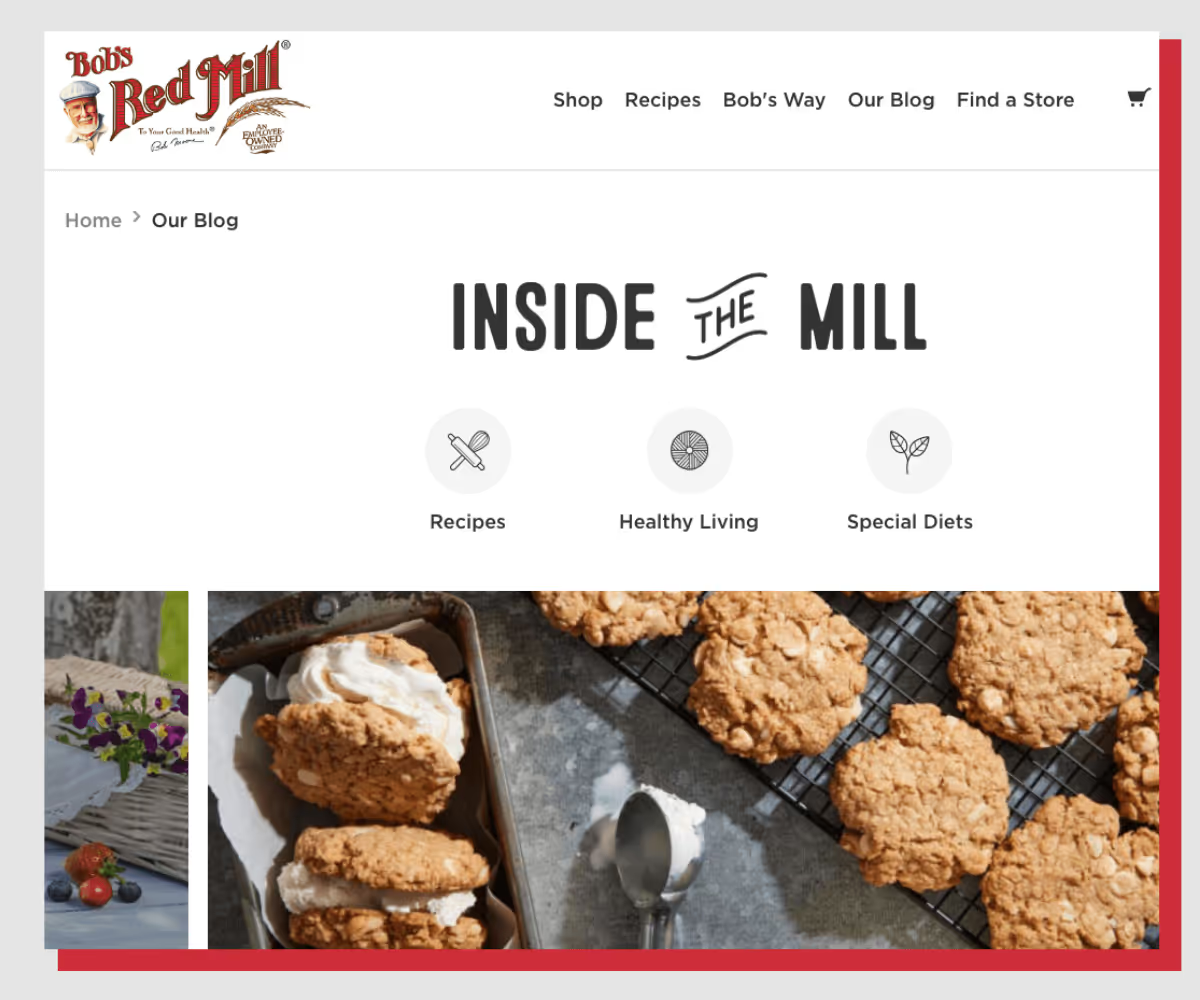
Blogging is often seen as a go-to strategy for B2B brands, where buyers actively look for in-depth information before making a decision. But B2C brands can unlock just as much value from a well-executed blog.
Take Bob’s Red Mill as an example. The Oregon-based food brand doesn’t use its blog to push products. Instead, it offers genuine value—nutrition tips, cooking inspiration, and approachable, healthy recipes. The result? Readers discover practical, everyday ways to use Bob’s Red Mill products without ever feeling like they’re being sold to.
This content does more than drive traffic. It reinforces the brand’s mission around healthy living and positions Bob’s Red Mill as a trusted voice in nutrition. Over time, that consistency builds credibility, loyalty, and positive brand association.
So when you’re scrolling for a pancake recipe on a lazy Saturday afternoon, it’s no surprise you might land on Bob’s Red Mill’s blog and walk away with both inspiration and a deeper connection to the brand.
HubSpot
HubSpot’s blog is one of the most well-known examples of content marketing done right. HubSpot publishes extensive educational content on marketing, sales, customer success, and business growth. The blog meets readers at every stage of the funnel—from introductory “how-to” guides to advanced strategy breakdowns—making it a long-term resource for professionals. By consistently solving real problems, HubSpot positions itself as a trusted authority long before a purchase decision is made.
Cloudflare
Cloudflare’s blog publishes technical deep dives into internet infrastructure, cybersecurity threats, and performance optimization. Topics include DDoS mitigation, zero trust architecture, DNS security, and emerging attack vectors. Posts often explain how threats work before outlining defensive strategies, educating both technical and non-technical readers. This approach builds authority and transparency in a highly complex security landscape.
In the end
Starting a blog for your brand might look like a tedious process and is often postponed or neglected. The truth is that every day of delay will make it harder for your blog to gain traction in the future.
High-quality blog content has undeniable advantages for your brand’s growth as it can generate consistent organic traffic to your website on a sustained basis. Unlike paid ads, your blog will continue to bring you traffic.


You might also like






Your brand deserves the spotlight. We'll get you there.
We turn influence into impact.

